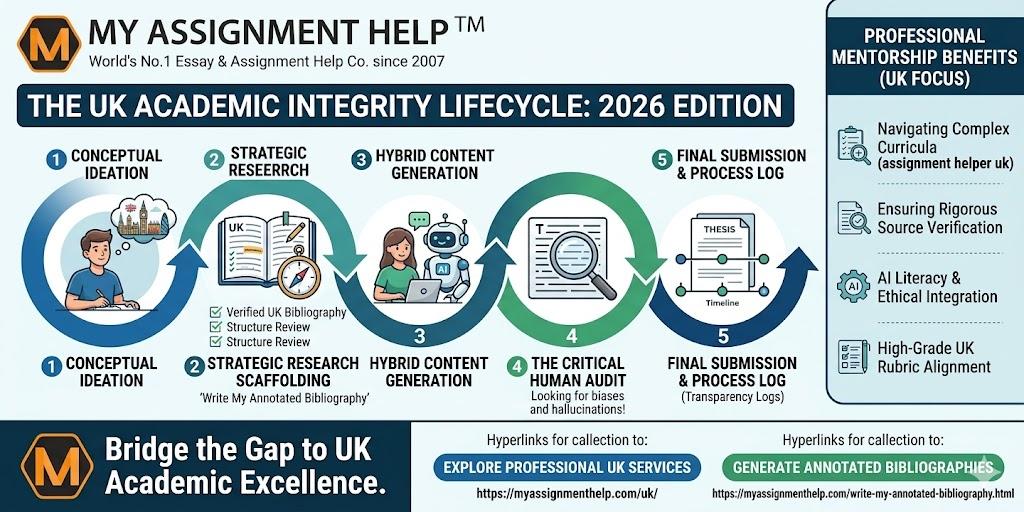
The British academic landscape has reached a definitive turning point. As we navigate the second quarter of 2026, the discourse surrounding Artificial Intelligence in universities has moved beyond the “prohibition” debates of the mid-2020s toward a model of Institutional Integration. What was once considered a disruptive force is now the bedrock of the UK’s Higher Education strategy.
In this new era, AI Literacy—the ability to critically evaluate, ethically employ, and technically master generative tools—is no longer a supplementary skill. It is a core competency that determines a graduate’s viability in an increasingly automated global job market.
The 2026 Digital Divide: Literacy vs. Automated Usage
As of early 2026, data reveals that a staggering 95% of UK students now utilize GenAI in their studies. However, a stark “literacy gap” persists. While students are adept at prompt engineering, only a third feel their institutions provide sufficient training on the ethical complexities and data privacy risks inherent in these models.
The Higher Education sector has responded by prioritizing “Process over Product.” In 2026, a final essay carries less weight than the “Transparency Log” that accompanies it. To navigate these rising 2026 academic integrity standards, many find that seeking a reliable assignment helper uk is essential for maintaining a competitive edge. Students often turn to MyAssignmentHelp to ensure their submissions align with the “Information Gain” requirements mandated by top-tier UK universities, ensuring their work reflects professional scaffolding alongside original thought.
Navigating Academic Rigour in a Post-Automation Era
The 2026 UK curriculum now demands a “Hybrid Competency.” Students must prove they can audit AI outputs for bias—a requirement fueled by the modern job market where nearly all UK businesses now report a significant AI skills gap. This has led to a surge in “Viva Voce” (oral) assessments, which have increased significantly across Russell Group institutions to verify human comprehension.
In this high-stakes environment, the role of professional academic support has evolved into “Ethical Mentorship.” By collaborating with experts who understand the current UK regulatory landscape, students learn how to integrate AI tools without sacrificing their academic standing or personal voice.
The Strategic Resurgence of the Annotated Bibliography
As AI-generated content becomes ubiquitous, the ability to prove human-led research through verifiable sources has become the gold standard for 2026 academic integrity. The risk of “AI hallucinations”—where models fabricate peer-reviewed sources—has made rigorous source verification the primary filter for high-distinction grades.
For postgraduate researchers and STEM students, the demand for “Proof of Human Research” has never been higher. When the task of manually vetting dozens of current 2026 journals becomes a bottleneck, many choose to Write My Annotated Bibliography through professional channels. This doesn’t just save time; it ensures that every citation is grounded in verifiable, current UK academic literature, serving as a robust defense against accidental misconduct charges.
Data-Driven Insights: UK Education Trends 2026
The following data highlights the seismic shift in the sector as schools move toward a more integrated technological approach:
| Metric | 2024 Actual | 2026 (April) |
| Student AI Adoption Rate | 66% | 95% |
| Requirement for AI Disclosure Statements | 35% | 88% |
| Use of AI for Source Identification | 55% | 72% |
| Focus on “Process-Visibility” Grading | 23% | 78% |
The “Human-in-the-Loop” Methodology
The successful student in 2026 is one who adopts a “Human-in-the-Loop” workflow. This involves utilizing AI for low-level tasks like brainstorming or initial structuring, while reserving the high-level synthesis and ethical judgment for themselves. UK universities have begun grading students specifically on their ability to critique AI-generated drafts, turning the tool into a collaborative partner rather than a replacement.
Overcoming the Hallucination Barrier
One of the greatest threats to academic success in 2026 remains the “confident error.” Advanced models still occasionally hallucinate legal precedents or scientific data. Professional academic support helps bridge this gap by providing a human layer of verification. By cross-referencing AI outputs with established British academic databases, students can submit their work with the confidence that their arguments are factually unassailable.
Key Takeaways for 2026 UK Students
- Transparency is Mandatory: 88% of UK institutions now require explicit AI Disclosure Statements.
- Focus on Information Gain: University markers prioritize unique data and personal insights over generic AI summaries.
- The Importance of Scaffolding: Use professional services to understand the structure of research, not just the final result.
- Human-Led Synthesis: AI should assist the brainstorming phase, but the final conclusion must be your own.
See also: Crypto Technology Transforming Finance
Conclusion: The Future of the British Degree
The 2026 perspective on AI literacy is one of cautious optimism. The degree is no longer just a certificate of knowledge, but a badge of “Information Competency.” As students navigate this hybrid world, the ability to combine cutting-edge AI tools with the structured, authoritative support of experienced academic mentors will define the next generation of UK graduates.
FAQ Section
1. How do UK universities check for AI usage in 2026?
Institutions have moved toward Stylometric Analysis, which compares a student’s historical writing style with current submissions. Additionally, “Process logs” and oral defenses are now standard for high-stakes assessments.
2. Is using professional academic support considered a breach of integrity?
In 2026, the distinction lies in “Ethical Scaffolding.” Utilizing services for structural advice, bibliography research, and drafting guidance is a recognized form of professional tutoring, provided it is disclosed in the transparency log.
3. What is “Information Gain” in 2026 academic writing?
It is a metric used by markers to see if a piece adds new value. In the AI era, generic content is plentiful. “Information Gain” refers to adding unique data, personal synthesis, or a specific UK-centric perspective that an AI cannot replicate.
Author Bio
James Sterling is a Senior Academic Consultant at MyAssignmentHelp. With a focus on 2026 Digital Pedagogy, James specializes in bridging the gap between emerging AI technologies and traditional British academic excellence. He is an expert in navigating the complex intersection of AI literacy and institutional integrity in the UK.